
EXPLORER: Smart
Wearable Lighting Hat
Reimagining outdoor safety through a connected wearable experience that combines lighting, navigation, and real-time environmental awareness.
*Completed collaboratively as part of a team-based academic design project.
Role:
Product Designer, UX Designer, & User Research
Tools:
Physical Prototyping, User Research, Sketching, Iterative Design, Figma UI Design, Wearable Computing, Accessibility-Centered Design
Timeframe:
Two weeks
Challenge
How might we create a hands-free lighting solution that improves visibility, safety, and mobility without compromising comfort or ease of use?
Low-light environments create a unique challenge: users need reliable visibility while keeping their hands free and attention focused on their surroundings.
Many existing solutions require a tradeoff between comfort, mobility, and functionality. Traditional flashlights occupy a user's hands, while headlamps can feel bulky, uncomfortable, or difficult to adjust in real-world situations. Existing products also often lack integrated safety features, intuitive controls, and accessibility considerations.
As a result, users experience increased cognitive and physical strain when navigating dark environments, working outdoors, or responding to unexpected situations.
The Approach
To better understand the challenges associated with low-light navigation and hands-free visibility, we gathered feedback from eight participants across a variety of professions, including healthcare, HVAC, construction, project management, and digital advertising.
Participants reviewed a series of early wearable lighting concepts and shared feedback on comfort, usability, safety, and overall practicality. Our goal was to identify which features mattered most to users and understand how a wearable lighting solution could better support real-world activities.
What We Learned
Comfort matters more than technical complexity.
Participants consistently prioritized wearability and long-term comfort over advanced or experimental features. Users wanted a solution that felt natural to wear for extended periods without becoming distracting or cumbersome.
Safety extends beyond visibility.
Users viewed features such as emergency support, camera functionality, and battery awareness as equally important to lighting itself. Visibility was only one component of feeling safe in low-light environments.
Physical controls inspire confidence.
Many participants anticipated using the device outdoors, while working, or while wearing gloves. As a result, tactile controls were preferred over gesture-based or touch-only interactions.
Familiar form factors reduce friction.
Among the concepts presented, hat-based designs were consistently preferred over bands and other wearable alternatives. Participants felt that a hat offered greater comfort, practicality, and everyday usability.
Key Insights
Visibility alone wasn't enough. Users wanted a wearable system that combined lighting, safety, and control without compromising comfort or mobility.
While participants initially focused on illumination, their feedback revealed a broader need. Users weren't simply looking for a way to see better in the dark, they wanted a solution that supported confidence, safety, and ease of use across a variety of real-world situations.
This insight shifted our focus from designing a standalone lighting device to creating a connected wearable ecosystem. Rather than prioritizing brightness alone, we began exploring how lighting, emergency support, camera functionality, and intuitive controls could work together to create a more complete experience.
Exploring Early Concepts
Before committing to a final direction, we explored multiple wearable lighting concepts to understand how different form factors, control methods, and safety features might support users in low-light environments. Each concept tested a unique approach to visibility, comfort, interaction, and mobility. These early explorations helped us evaluate potential solutions and gather feedback before investing in a single direction. The goal was not to find the most technologically advanced concept, but to identify the solution that best balanced usability, comfort, and real-world practicality.
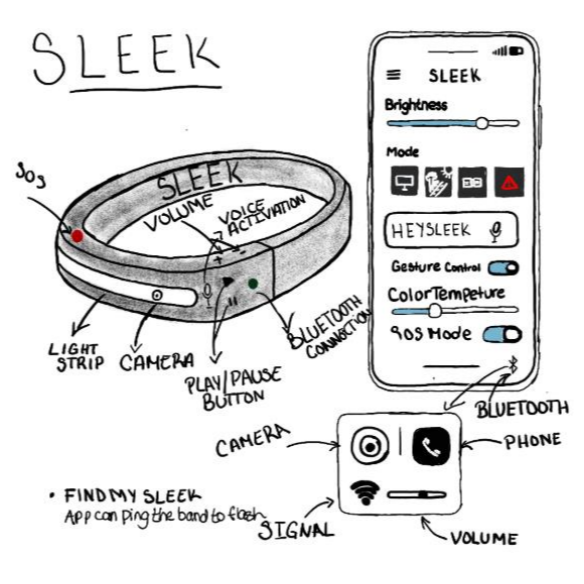
SLEEK
Minimalist wearable lighting band with tactile controls, Bluetooth connectivity, and front-facing LED visibility.
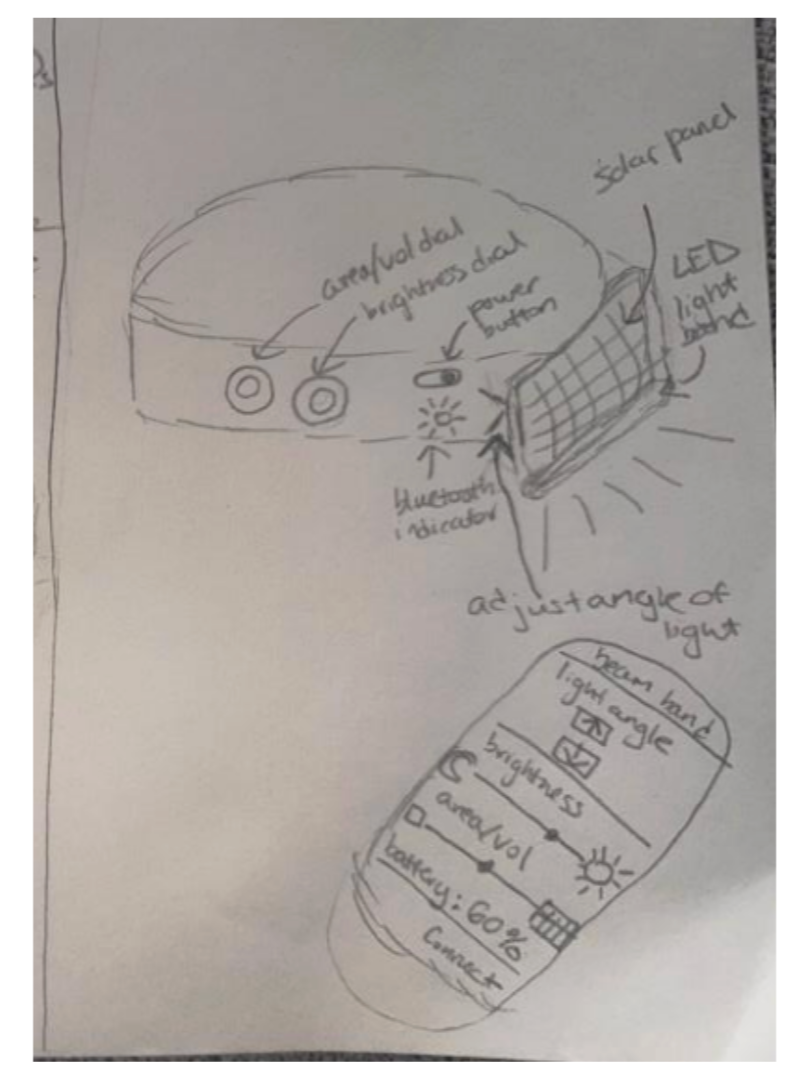
Beam Band
A lightweight smart lighting band designed for targeted, directional visibility with adjustable brightness controls and hands-free functionality for active movement.
Halo
Wraparound head-mounted lighting designed for balanced illumination without blocking field of view.
EXPLORER
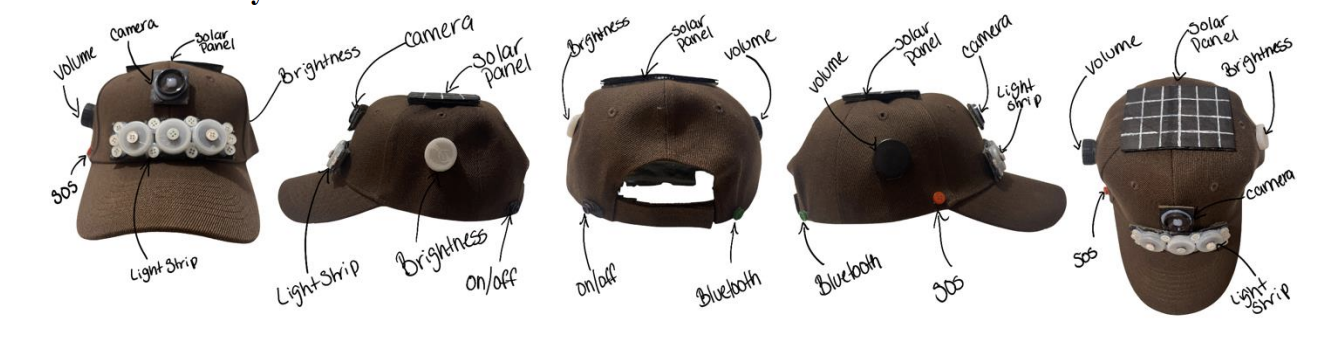
A solar-powered smart lighting hat featuring adjustable front LEDs, tactile controls, built-in camera, SOS safety mode, and mobile app connectivity.

Helping Hat
Comfort-first smart lighting hat with intuitive button placement and hands-free everyday usability.
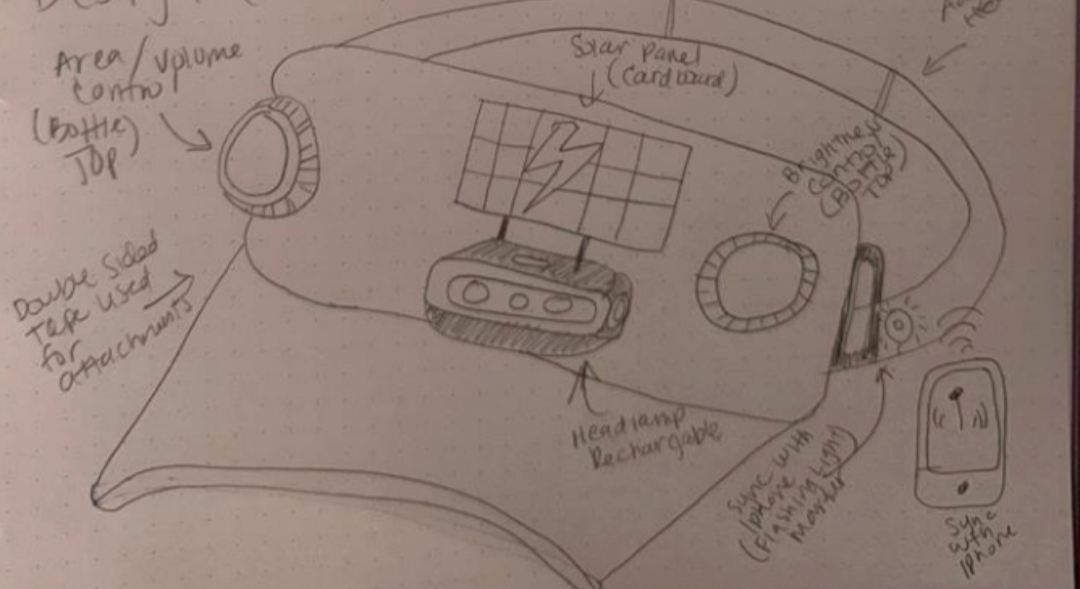
Modular Visor
A customizable smart lighting visor featuring detachable lighting modules and adjustable positioning for flexible visibility based on user activity and environment.
Shaping the Final Direction
To evaluate which concepts best addressed user needs, we conducted concept walkthrough sessions with eight participants across healthcare, HVAC, construction, project management, and digital advertising.
Participants reviewed the early concepts and provided feedback on comfort, controls, safety features, and overall practicality. The goal was to understand which ideas felt most useful in real-world situations and identify the features that should move forward into the final design.
What Influenced the Final Design
Safety features increased perceived value.
Participants responded positively to camera functionality, SOS support, and battery visibility, viewing these features as important additions rather than secondary enhancements.
Comfort and familiarity drove preference.
Participants consistently favored hat-based concepts over bands and alternative wearables. The familiar form factor felt more comfortable, approachable, and practical for extended use.
Physical controls were preferred over gesture-based interactions.
Users anticipated wearing gloves, working outdoors, or operating in situations where touch controls would be difficult to use. Tactile buttons provided greater confidence and reliability.
Durability mattered.
Concerns around battery life, charging methods, and water resistance highlighted the importance of designing for real-world environmental conditions.
Designing the EXPLORER Experience
User feedback played a significant role in shaping the final direction of EXPLORER. Rather than pursuing the most technologically complex solution, we focused on creating a wearable system that balanced visibility, safety, comfort, and ease of use.
The final concept integrates adjustable front-facing lighting, tactile controls, solar-assisted charging, a built-in camera, and SOS emergency functionality into a familiar hat form factor. By embedding these features into an everyday wearable, the design reduces friction while supporting users in a variety of low-light scenarios.
Design Decisions
A familiar form factor
Participants consistently preferred hat-based concepts over alternative wearable designs. The hat provided a comfortable, approachable foundation while naturally supporting the placement of lighting, controls, and safety features.
Safety beyond illumination
Camera functionality and SOS support were incorporated based on participant feedback highlighting the importance of documentation, emergency preparedness, and peace of mind during nighttime activities.

Tactile controls for real-world use
Physical buttons were retained to support use in outdoor environments, while wearing gloves, or in situations where touch-based interactions may be difficult or unsafe.
Sustainable power management
Solar-assisted charging was introduced as a way to extend battery life and reduce reliance on frequent charging, supporting longer outdoor use.
Bringing the Concept to Life
To better understand how the EXPLORER concept would function as a real-world wearable, we created physical prototypes to evaluate comfort, ergonomics, component placement, and overall usability.
While each prototype varied slightly in construction and aesthetics, all represented the same core feature set, including integrated lighting, tactile controls, solar-assisted charging, camera functionality, and SOS support. Creating tangible models allowed us to move beyond sketches and assess how the design would feel when worn and interacted with in everyday scenarios.
Physical prototype iterations exploring ergonomics, component placement, and wearable comfort.
Extending the Experience Through Mobile
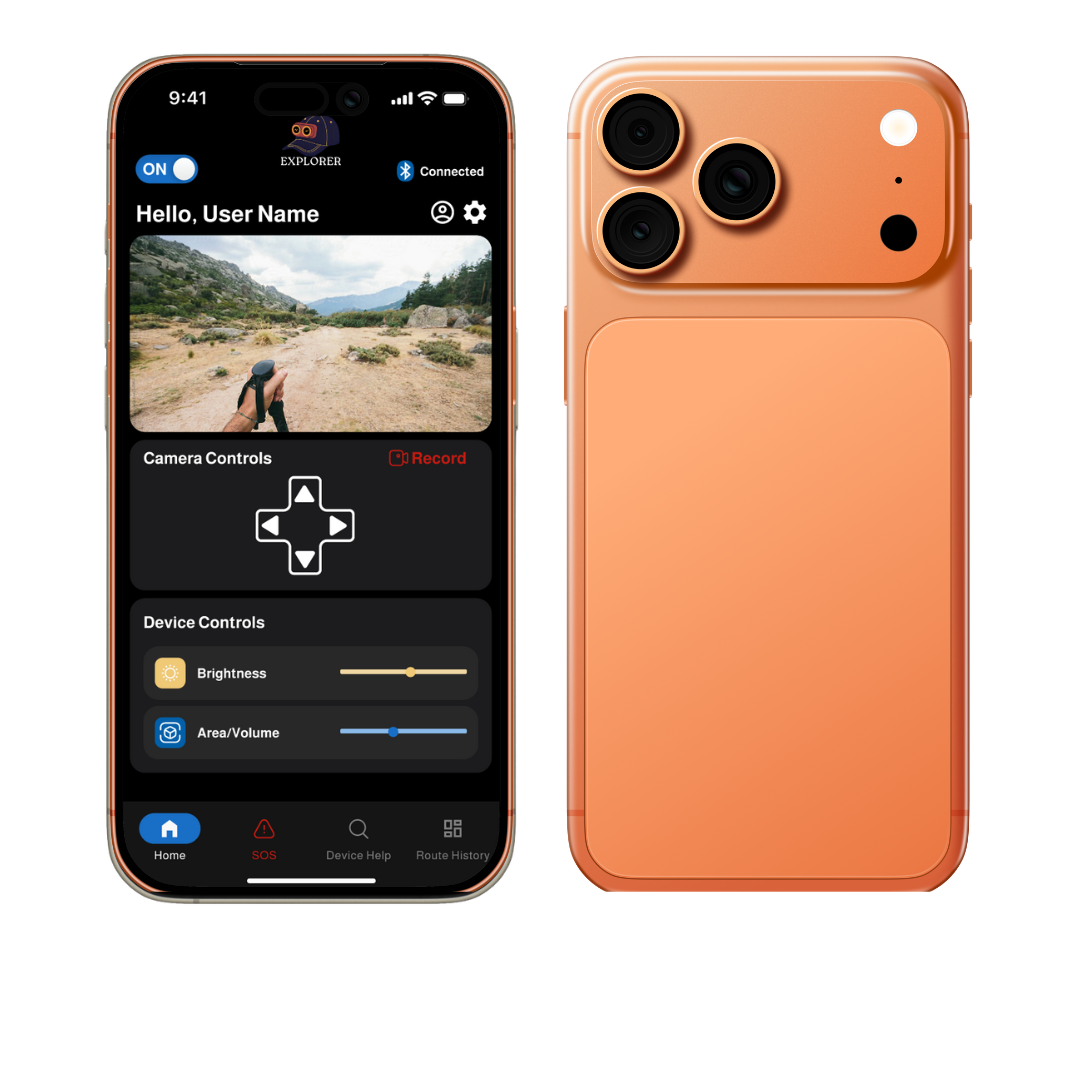
While EXPLORER was designed to function independently as a wearable device, a companion mobile app was developed to provide additional control, visibility, and safety support when needed.
The app acts as a central hub for managing device settings and monitoring key information in real time. Rather than replacing the physical controls, the interface complements the wearable by offering expanded functionality while maintaining a simple and intuitive experience.
Key Capabilities
Device and lighting controls
Users can adjust brightness levels, manage light coverage, and monitor device settings directly from the app, providing greater flexibility across different environments and visibility needs.
Emergency support
An integrated SOS feature provides quick access to emergency assistance, reinforcing the safety-focused goals of the overall system.
Real-time camera access
The app supports a live camera feed and recording controls, allowing users to document activities, capture footage, and review content directly from their mobile device.
Device awareness
Battery visibility, device status, and route history help users stay informed and prepared while navigating unfamiliar or low-light environments.
Outcome
The final EXPLORER concept transforms wearable lighting from a single-purpose tool into a connected safety and navigation system. By combining adjustable lighting, tactile controls, camera functionality, solar-assisted charging, and SOS support within a familiar hat form factor, the design prioritizes visibility, safety, and ease of use.
User feedback played a critical role throughout the design process, helping the team prioritize comfort, practicality, and accessibility over unnecessary complexity. The result is a wearable experience that supports a variety of real-world activities, including outdoor work, nighttime navigation, recreation, and emergency situations.
Rather than asking users to adapt to new technology, EXPLORER integrates technology into a familiar and approachable form, creating a solution that feels intuitive while addressing the challenges of low-light environments.
Reflection
One of the biggest lessons from this project was recognizing that users often prioritize practicality over novelty. While our early concepts explored a variety of wearable lighting solutions, user feedback consistently pointed us toward designs that felt familiar, comfortable, and easy to use.
The project reinforced the importance of validating assumptions early and allowing user feedback to guide design decisions. Features such as tactile controls, SOS functionality, camera integration, and the hat-based form factor were not simply design choices—they were direct responses to user needs and concerns.
If given more time, future iterations would explore enhanced weather resistance, expanded accessibility features, and more advanced integration between the wearable and mobile experience.