
StyleSource
A fashion discovery concept focused on inclusive UX, curated shopping flows, and reducing cognitive overload in e-commerce.
*Completed collaboratively as part of a team-based academic design project.
Role:
UX Designer & Researcher
Timeframe:
Two Weeks
Tools & Methods:
Figma, Heuristic Evaluation, Persona Development, Task Analysis, Low-Fidelity Sketching, Storyboarding, Wireframing, Iterative UI Design
Challenge
Users are often overwhelmed by large product catalogs, cluttered interfaces, and ineffective filtering systems. Rather than supporting confident decision-making, these experiences contribute to decision fatigue, uncertainty, and frustration throughout the shopping journey.
Finding the right outfit shouldn't feel like searching through thousands of irrelevant options.
Before designing a solution, we wanted to understand how people currently shop for clothing online and where the experience begins to break down.
Through user research, we discovered that the challenge wasn't finding products, it was navigating an overwhelming number of them. While participants generally understood their personal style, many struggled to efficiently identify products that felt relevant to their preferences.
The Approach
Users know their style, but struggle to find relevant options.
Participants could easily describe their aesthetic and shopping preferences, yet finding products that aligned with those preferences often required excessive browsing and filtering.
Users prefer structure over abundance.
Dense product grids and endless scrolling created frustration rather than inspiration. Participants consistently favored experiences that helped narrow choices and provide direction.
Users want guidance without losing control.
While users appreciated personalized recommendations, they were hesitant to rely entirely on algorithms. They wanted support throughout the shopping journey while maintaining ownership of their final decisions.
Users value inclusivity.
Participants could easily describe their aesthetic and shopping preferences, yet finding products that aligned with those preferences often required excessive browsing and filtering.
Users aren't overwhelmed by a lack of options. They're overwhelmed by too many unstructured options.
Key Insight
The opportunity wasn't to provide more choices, it was to provide better guidance. This insight became the foundation for StyleSource, shifting the experience away from traditional product-grid browsing and toward a more personalized and curated discovery journey.
Early Concept Development & Storyboards
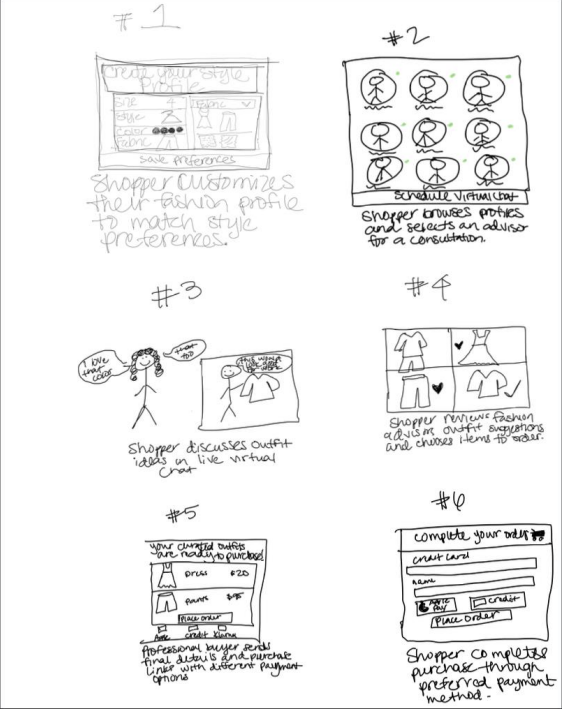
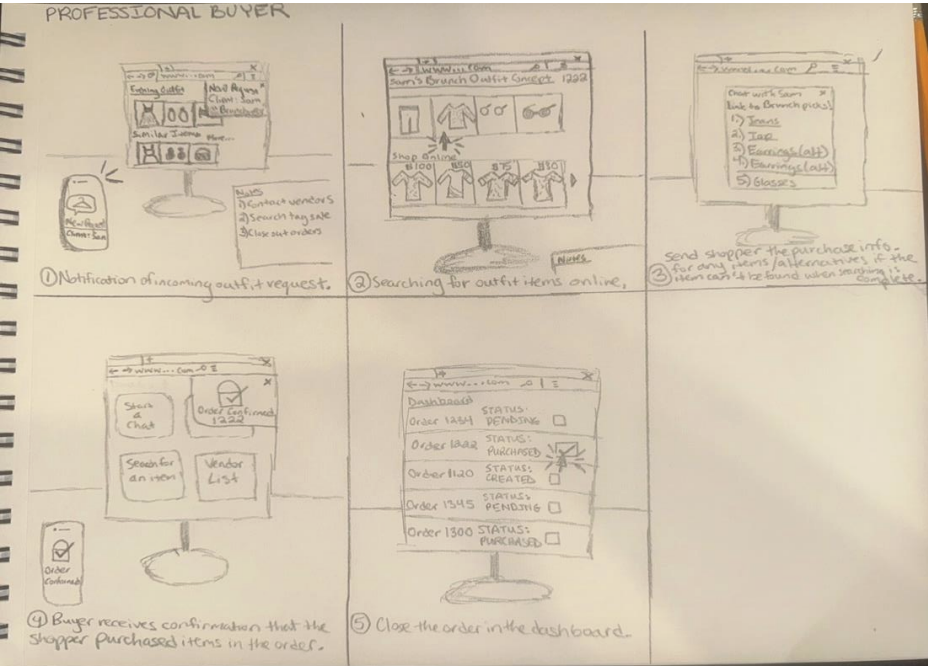
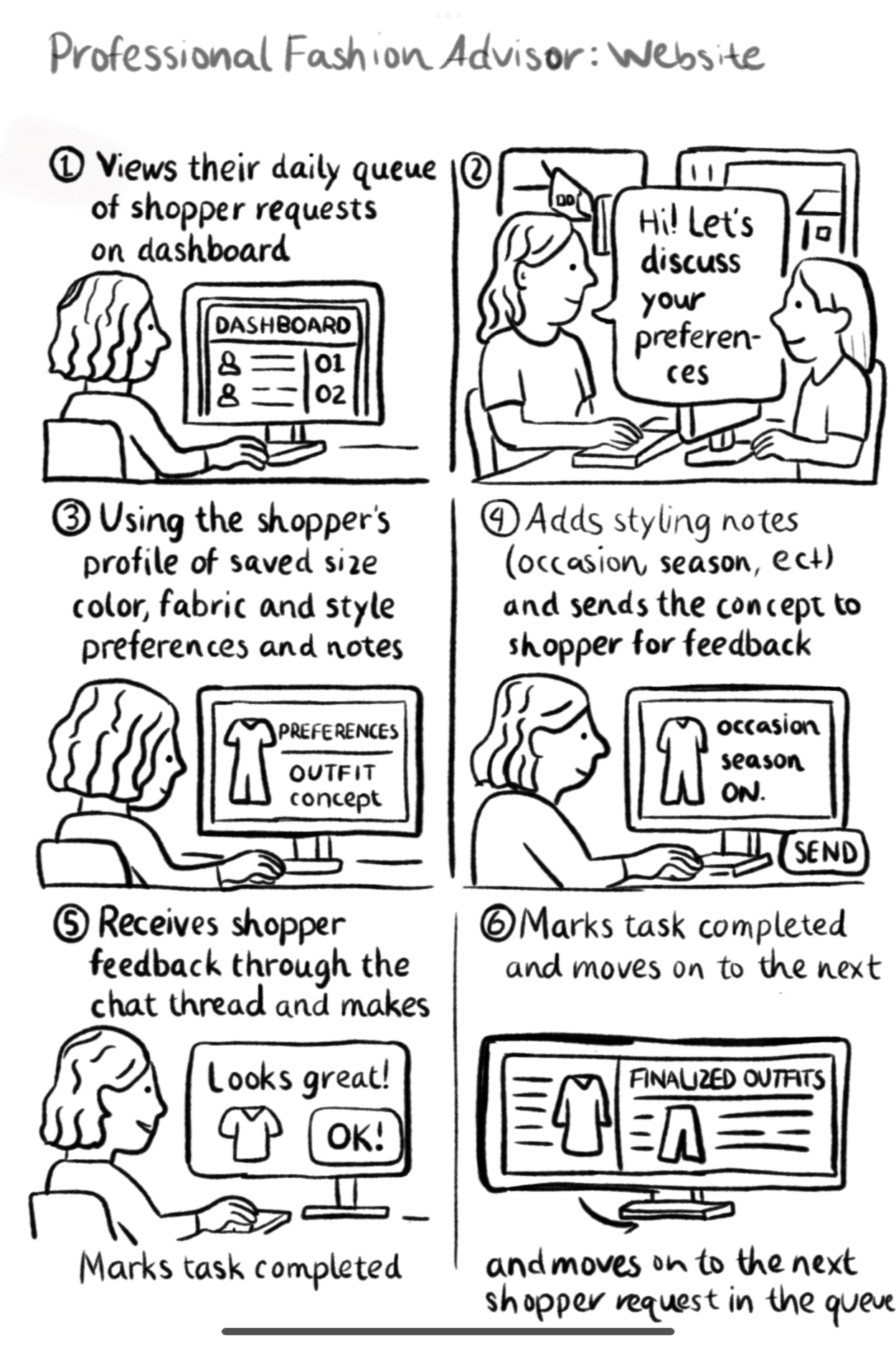
To translate these findings into a cohesive experience, we mapped the interactions between shoppers, fashion advisors, and buyers through a series of storyboards. These early concepts helped us validate the end-to-end workflow before moving into wireframes.
Shopper Storyboard
The shopper completes a style profile, connects with a fashion advisor, and reviews curated outfit concepts.
Buyer Storyboard
The professional buyer sources items using vendor relationships and AI-enabled tools, generating shoppable links for checkout.
Fashion Advisor Storyboard
The fashion advisor reviews shopper preferences, develops outfit concepts, and communicates recommendations.
From Storyboards to Wireframes
With the core experience validated, we transitioned into low-fidelity wireframes to define layout structure, user flows, and interaction hierarchy.
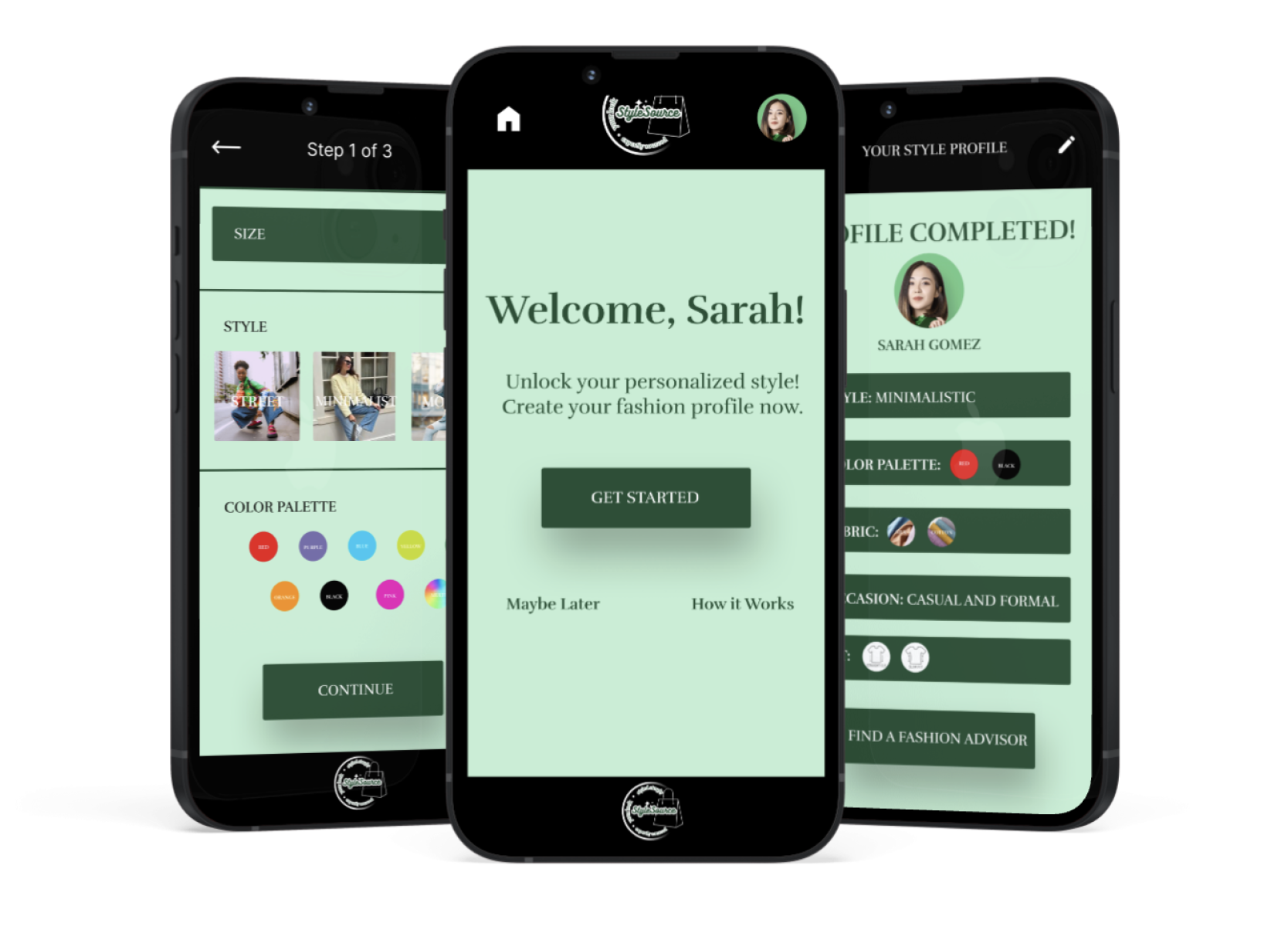
Shopper Wireframe
Advisor Wireframe
Outcome
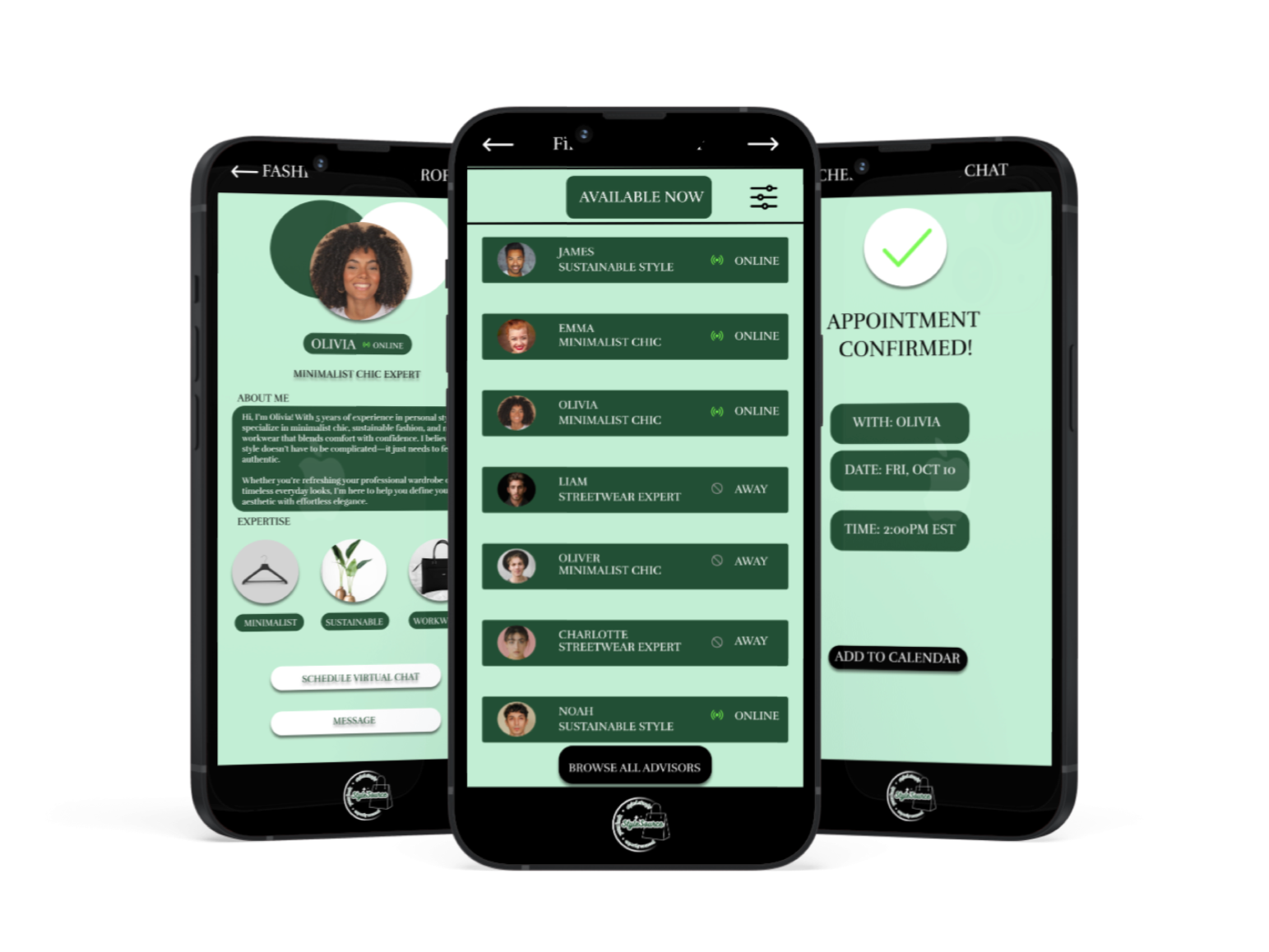
The final StyleSource experience transforms fashion discovery from an overwhelming browsing process into a guided and personalized journey. Through structured onboarding, curated recommendations, and advisor-supported decision-making, the platform helps users discover products that align with their preferences while reducing cognitive load.
User walkthrough sessions revealed that participants found the onboarding process intuitive and easy to follow. The use of visual selections made the experience feel more engaging and approachable than traditional form-heavy shopping experiences, while the platform's purpose and value proposition were quickly understood.
Testing also highlighted several opportunities for refinement. Based on participant feedback, progress indicators were introduced to provide greater visibility throughout onboarding, style categories received clearer labeling and guidance, and future enhancements were explored to support saving and revisiting selections. These improvements helped create a more transparent and confidence-building experience for users.
The final design prioritizes clarity, accessibility, and confidence throughout the shopping journey, offering a more intentional alternative to traditional product-heavy browsing.
Final Prototype Walkthrough
The following walkthrough demonstrates how users move through onboarding, define their style preferences, and receive personalized recommendations through the StyleSource experience.
Reflection
One of the biggest lessons from this project was recognizing that users don't always need more options, they need better guidance.
While many e-commerce platforms compete by offering larger catalogs and more filtering options, our research revealed that confidence often comes from structure and clarity. Designing StyleSource challenged me to think beyond traditional shopping patterns and focus on creating an experience that balances personalization, accessibility, and user autonomy.