
CommunityLens
A community-driven accessibility platform that helps neurodivergent individuals, caregivers, and families discover sensory-friendly places and plan outings with greater confidence.
Project Type: Graduate Academic Team Project
Tools: Figma • FigJam • Maze • Canva
Timeframe: 10 Weeks • 2026
Role: UX Designer • UX Researcher
Methods: Literature Review • User Interviews • Competitive Analysis • User Flows • Wireframing • Prototyping • Usability Testing
Challenge
How might we reduce the mental and physical planning burden for families and individuals navigating sensory-heavy environments?
For many neurodivergent individuals and caregivers, visiting a new place can be overwhelming. Existing platforms like Google Reviews and Yelp rarely provide the accessibility details that determine whether an outing will be successful, such as noise levels, sensory triggers, restroom accommodations, seating availability, or quiet spaces. As a result, many people rely on the same familiar locations rather than risk an unpredictable experience.
Our goal was to reduce this planning burden by creating a community-driven platform where users could discover and review local businesses based on accessibility criteria while exploring sensory-friendly events. Through trusted reviews, photo previews, and verified event information, CommunityLens empowers users to make informed decisions, reducing uncertainty so they can focus on enjoying the experience rather than preparing for it.
Annotated Bibliography
Before designing CommunityLens, we conducted a mixed-methods research study to better understand the challenges neurodivergent individuals and caregivers face when planning outings. By combining secondary and primary research, we identified the gaps in existing platforms and uncovered opportunities to design a more accessible, community-driven experience.
Research Findings
Before engaging with users, we conducted a literature review to better understand accessibility, inclusive design, and the limitations of existing digital tools. This research established the foundation for our project and highlighted the importance of designing around real-world accessibility needs rather than assumptions.
Key Findings
Existing accessibility information often lacks the details users need to plan confidently.
Sensory considerations are frequently overlooked.
Community-driven reviews are more trusted than business-provided information.
Caregivers spend significant time researching before visiting new places.
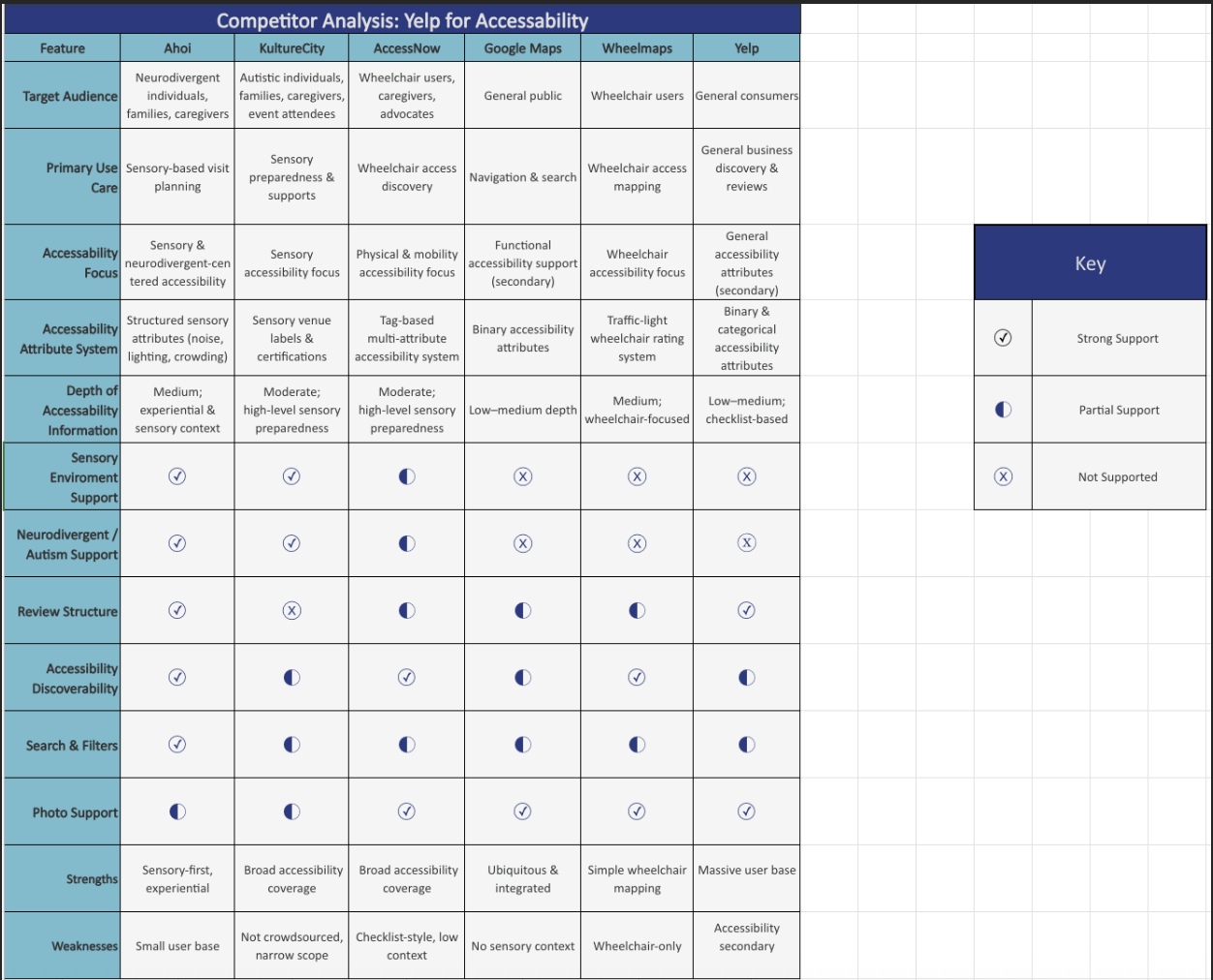
Searching accessibility reviews
This flow follows a user as they search for accessibility reviews on a local business or space.
Primary Research
User Interviews
We conducted five semi-structured interviews via Microsoft Teams with individuals representing our target audience, including neurodivergent adults, caregivers, and parents. Each session lasted approximately 30 minutes and explored participants' planning habits, accessibility priorities, and experiences with existing platforms.
Interview Details:
Participants: 5
Format: Remote (Microsoft Teams)
Duration: ~30 minutes
Method: Semi-structured interviews (11 questions)
Competitive Analysis
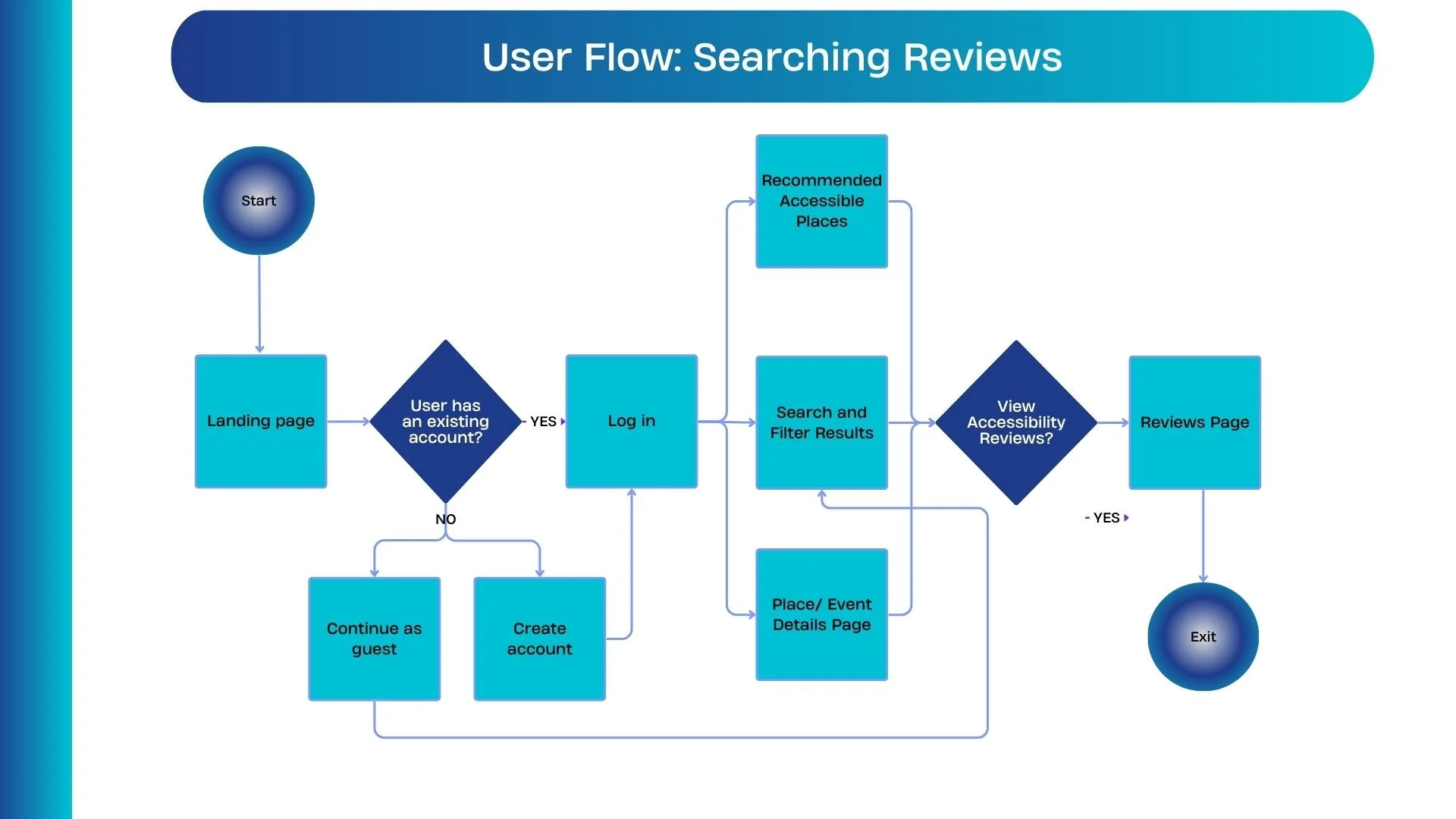
We evaluated existing accessibility and review platforms to identify opportunities for improvement. While platforms like Yelp and Google Maps provide limited accessibility information, none offered the sensory-specific details or community-centered approach our users needed. This validated the need for a platform where accessibility is the primary focus rather than a secondary feature.
We conducted five semi-structured interviews with individuals who regularly navigate accessibility challenges, including neurodivergent adults, caregivers, and parents. The interviews explored current planning behaviors, accessibility priorities, and what an ideal planning experience would look like.
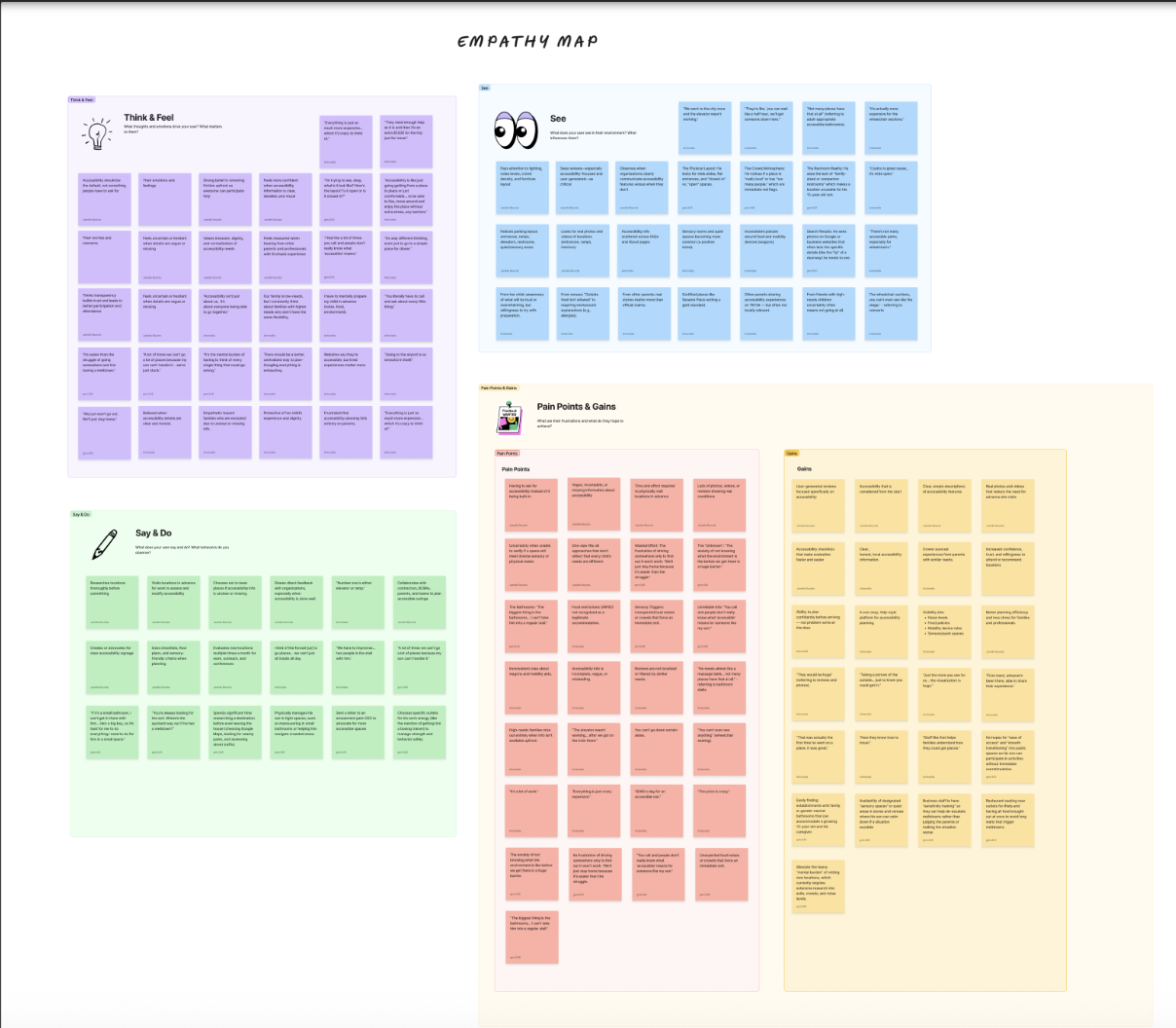
Empathy Maps
We synthesized interview findings into empathy maps to better understand users' thoughts, emotions, behaviors, and frustrations throughout the accessibility planning process. These maps revealed a recurring tension between users' desire for independence and the uncertainty created by limited accessibility information, reinforcing the need for a platform that reduces guesswork and builds confidence.
Secondary Research
After synthesizing findings from our literature review, competitive analysis, user interviews, empathy maps, and user flows, five key insights emerged. These themes validated the need for a community-driven accessibility platform and directly informed every major design decision.
Key Insight
Accessibility Information Is Incomplete: Users consistently reported that existing review platforms lack the detailed accessibility information needed to confidently plan outings. Critical factors such as noise levels, lighting, crowd density, and quiet spaces were often unavailable or difficult to find.
Community Builds Trust: Participants placed greater trust in reviews and photos shared by people with lived experience than in accessibility information provided by businesses. Community-driven insights helped users feel more prepared before visiting unfamiliar places.
Planning Is Time-Consuming: Caregivers and neurodivergent individuals described spending significant time researching locations across multiple websites before deciding whether a place would meet their needs.
Independence Requires Confidence: Users wanted the freedom to explore new places but often avoided unfamiliar environments because accessibility information was inconsistent or unavailable. Reliable planning tools could reduce uncertainty and encourage greater independence.
Accessibility Extends Beyond Physical Barriers: Research showed that accessibility includes sensory, cognitive, and social considerations—not just wheelchair access. Participants emphasized the importance of environmental details that are rarely captured by traditional review platforms.
User Flow
These flows helped identify critical moments where CommunityLens could simplify planning and provide meaningful support.
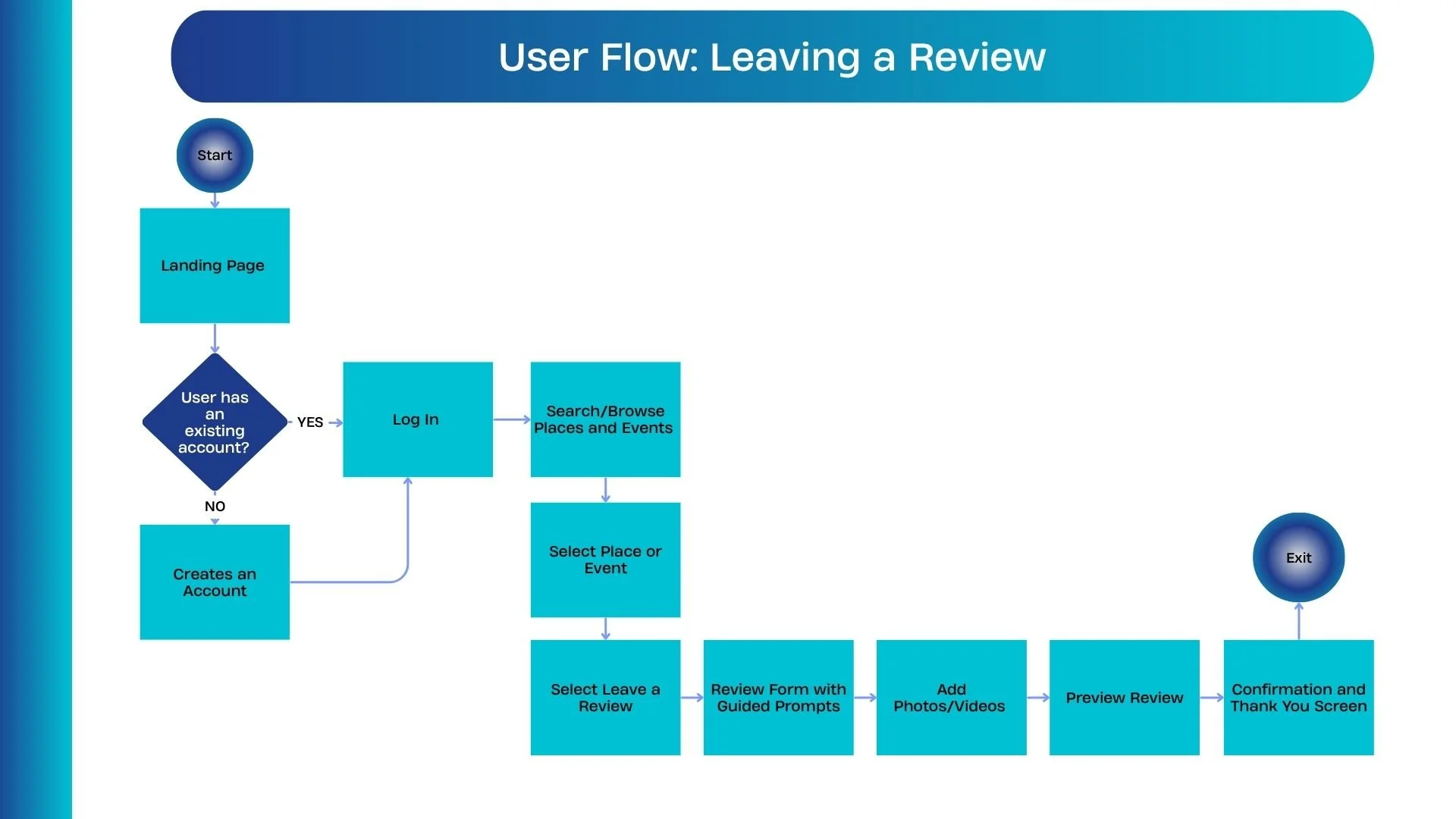
Leaving a community review
This flow maps the experience of a user who has visited a location and wants to share their accessibility experience with the community.
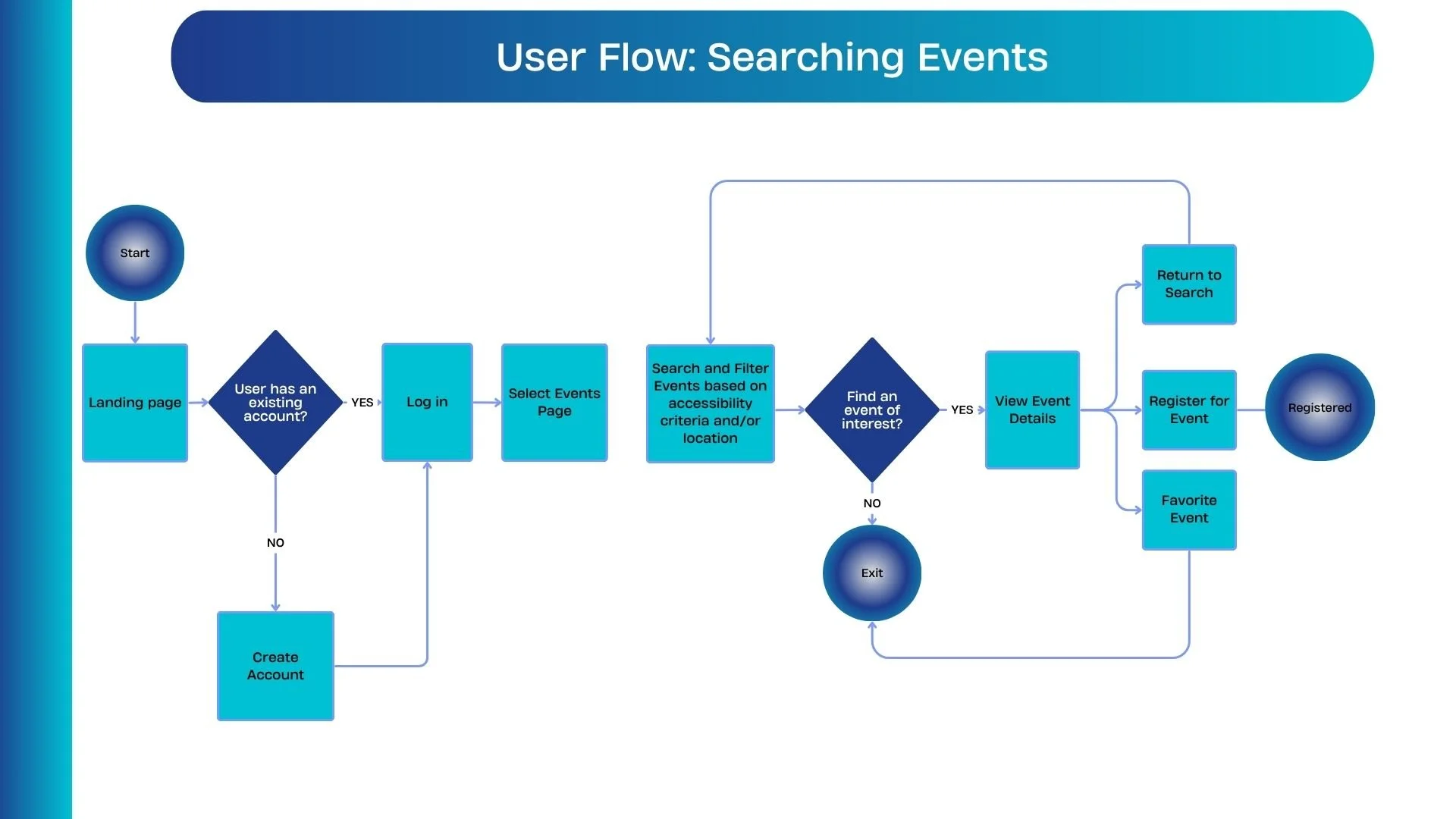
Searching sensory-friendly events
This flow follows a user as they explore the inclusive events dashboard to discover upcoming activities in their community.
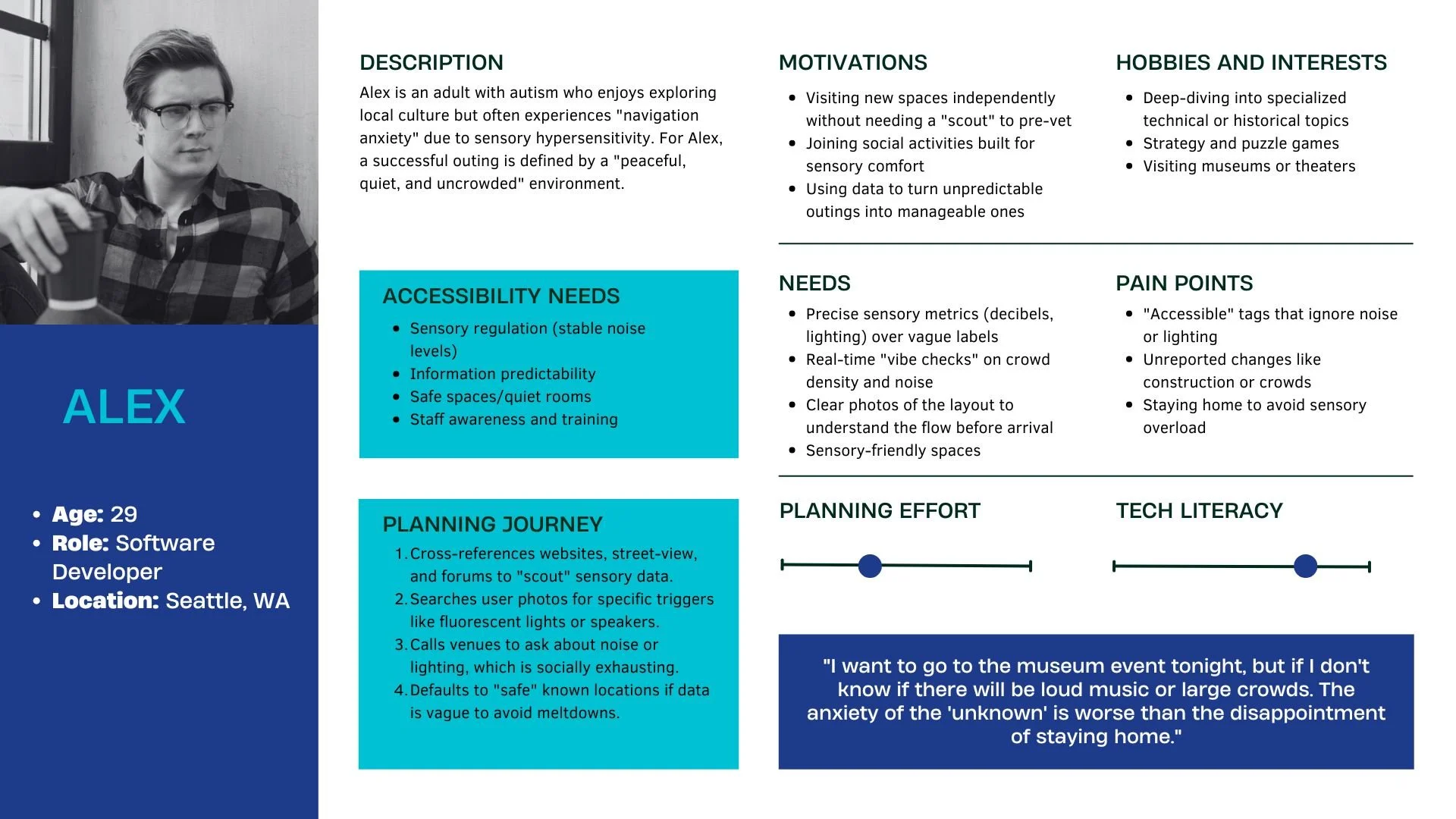
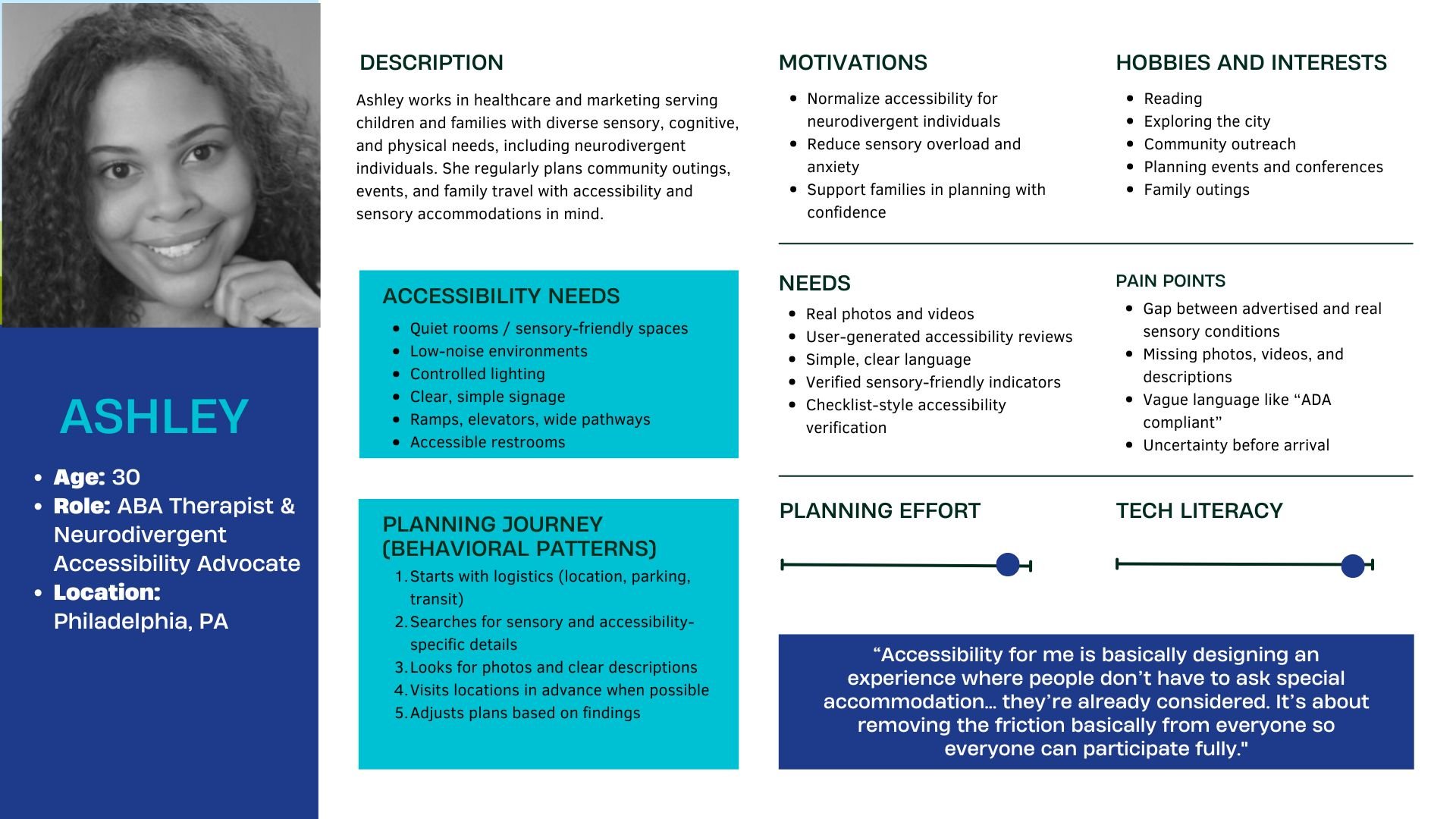
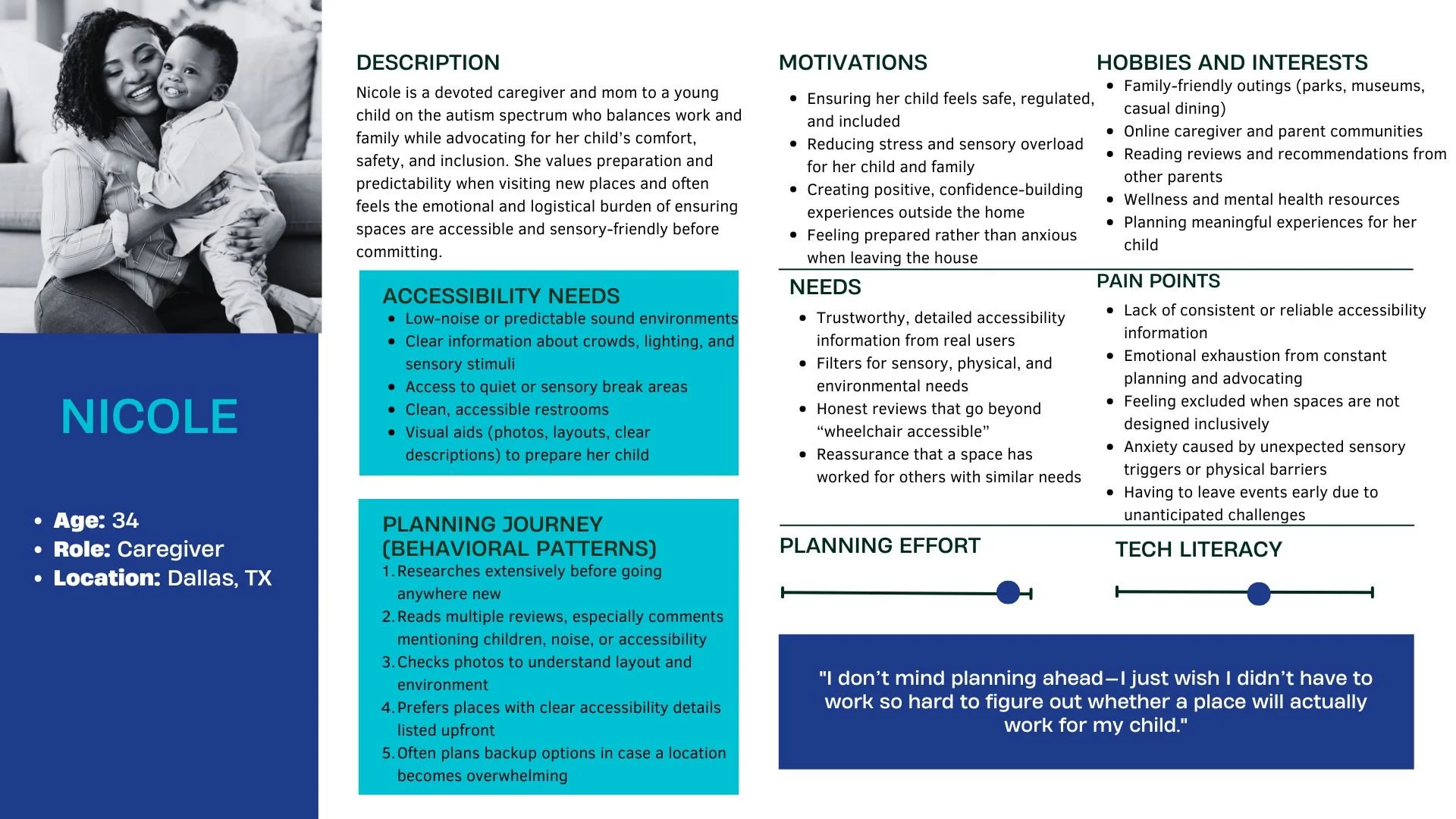
Personas
Finally, we developed personas that represented our primary user groups, including neurodivergent adults, caregivers, parents, and therapists. These personas served as a guide throughout the design process, ensuring each design decision aligned with real user needs, goals, and accessibility priorities.
Design Evolution
Designing a platform that makes accessibility planning more predictable.
CommunityLens was designed to help neurodivergent individuals and caregivers feel confident exploring unfamiliar environments. Unlike traditional review platforms that emphasize popularity, CommunityLens prioritizes the sensory and accessibility details that determine whether a space will feel comfortable and manageable.
Guided by our research, we translated user insights into an intuitive experience through sketching, iterative feedback, and high-fidelity prototyping in Figma.
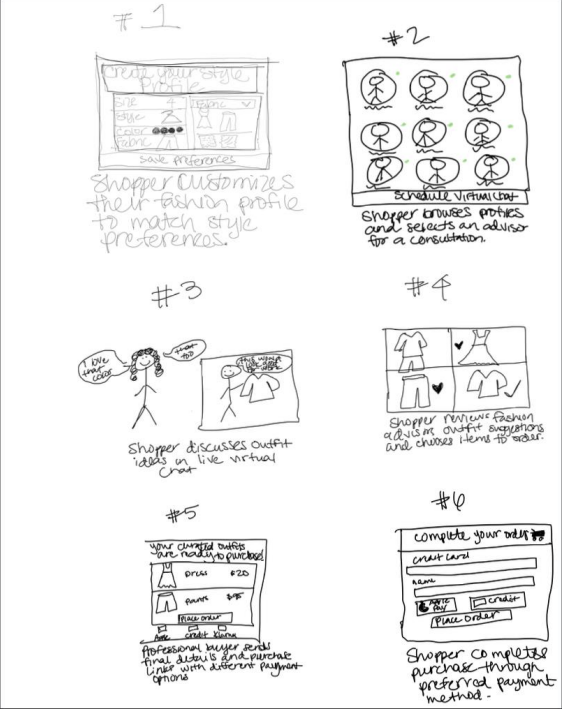
Explored how users could define their personal style, collaborate with a fashion advisor, and review curated outfit recommendations.
Shopper Storyboard
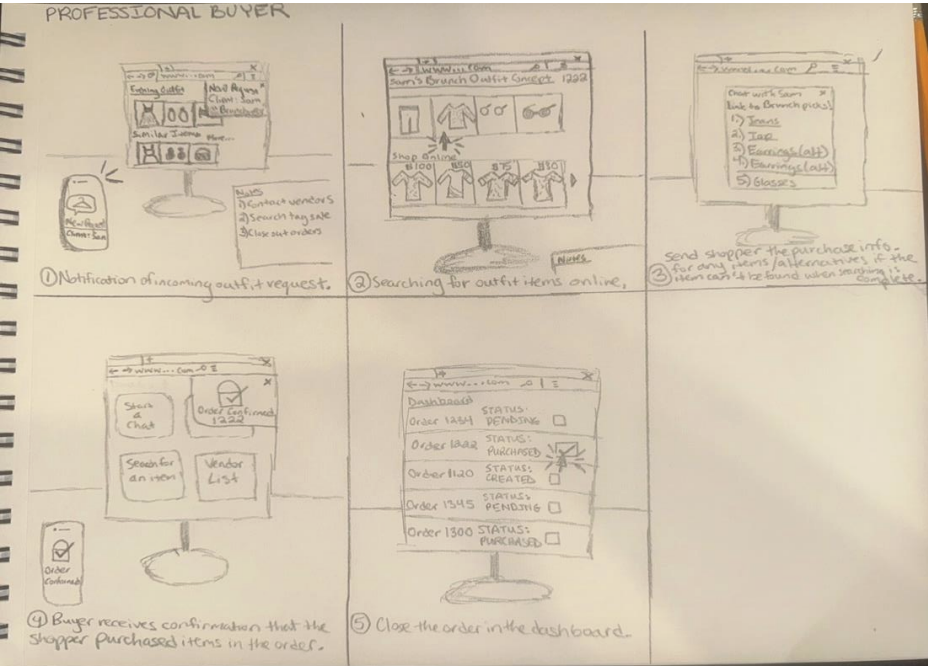
Explored how professional buyers could efficiently source products and transform recommendations into shoppable collections.
Buyer Storyboard
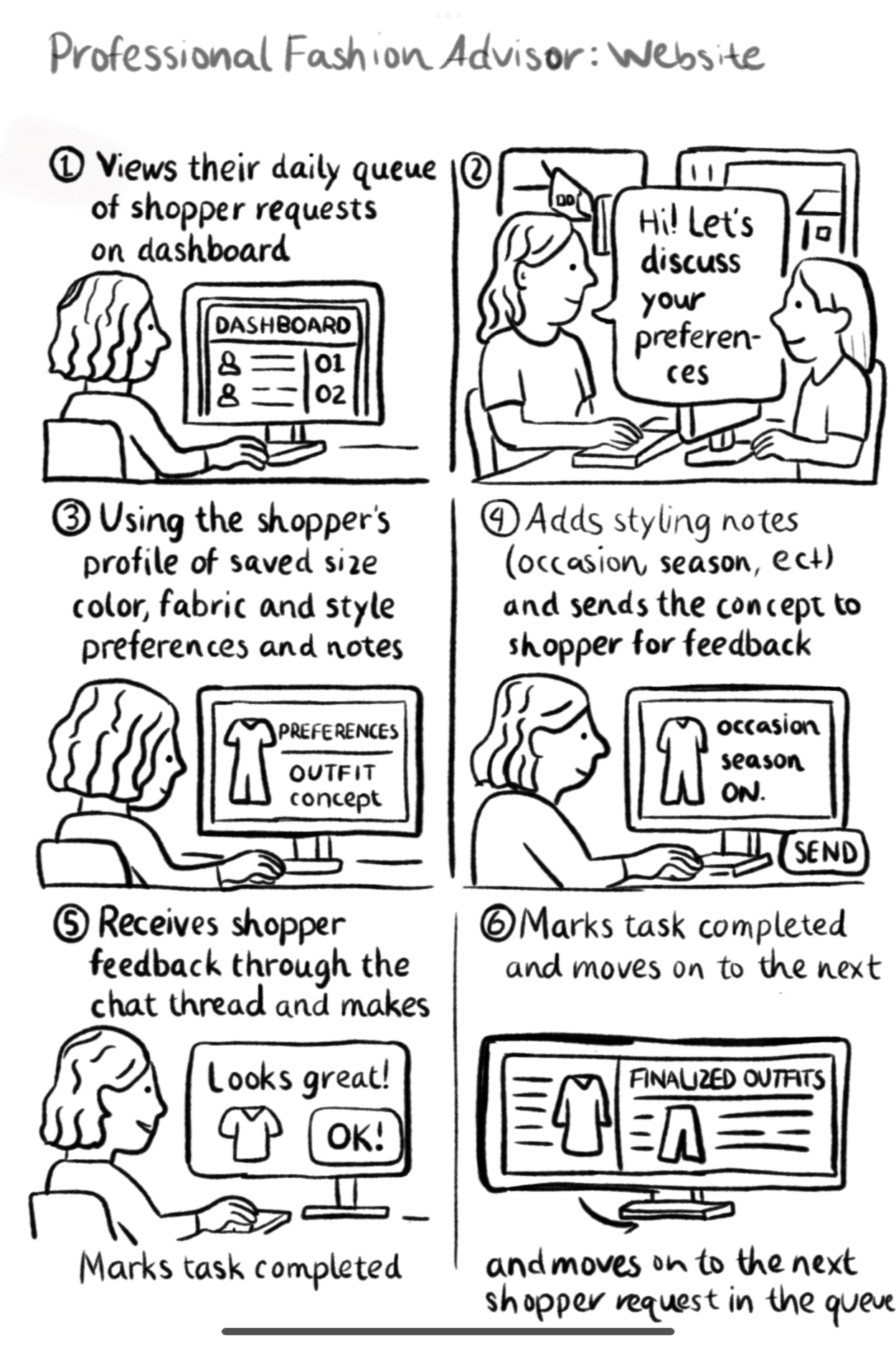
Explored the collaboration between shoppers and fashion advisors to create personalized recommendations while keeping users in control of final decisions.
Fashion Advisor Storyboard
From Storyboards to Wireframes
With the core experience validated, we transitioned into low-fidelity wireframes to define layout structure, user flows, and interaction hierarchy.
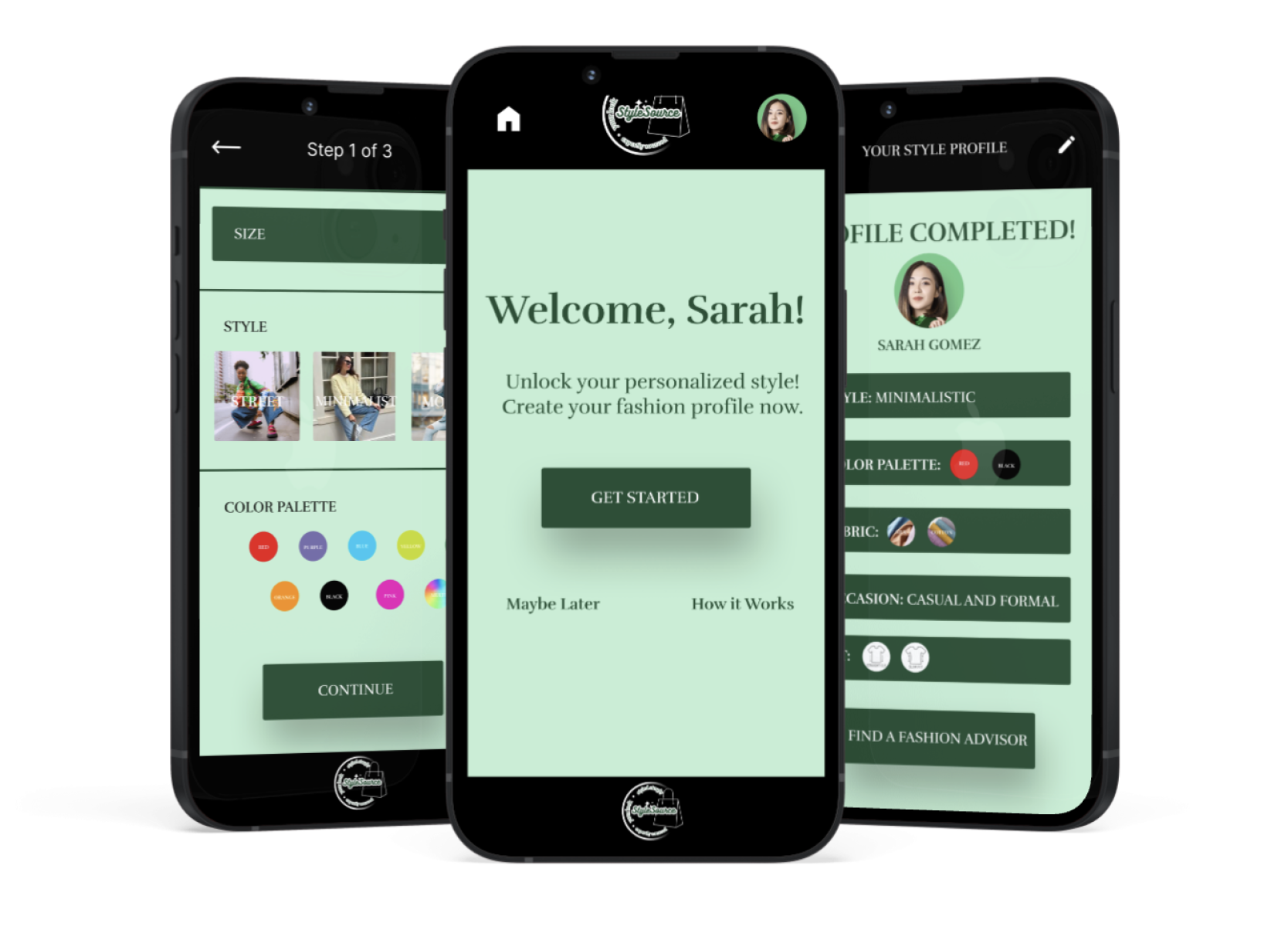
Shopper Wireframe
Focused on simplifying onboarding through guided profile creation, allowing users to define their style before receiving personalized recommendations.
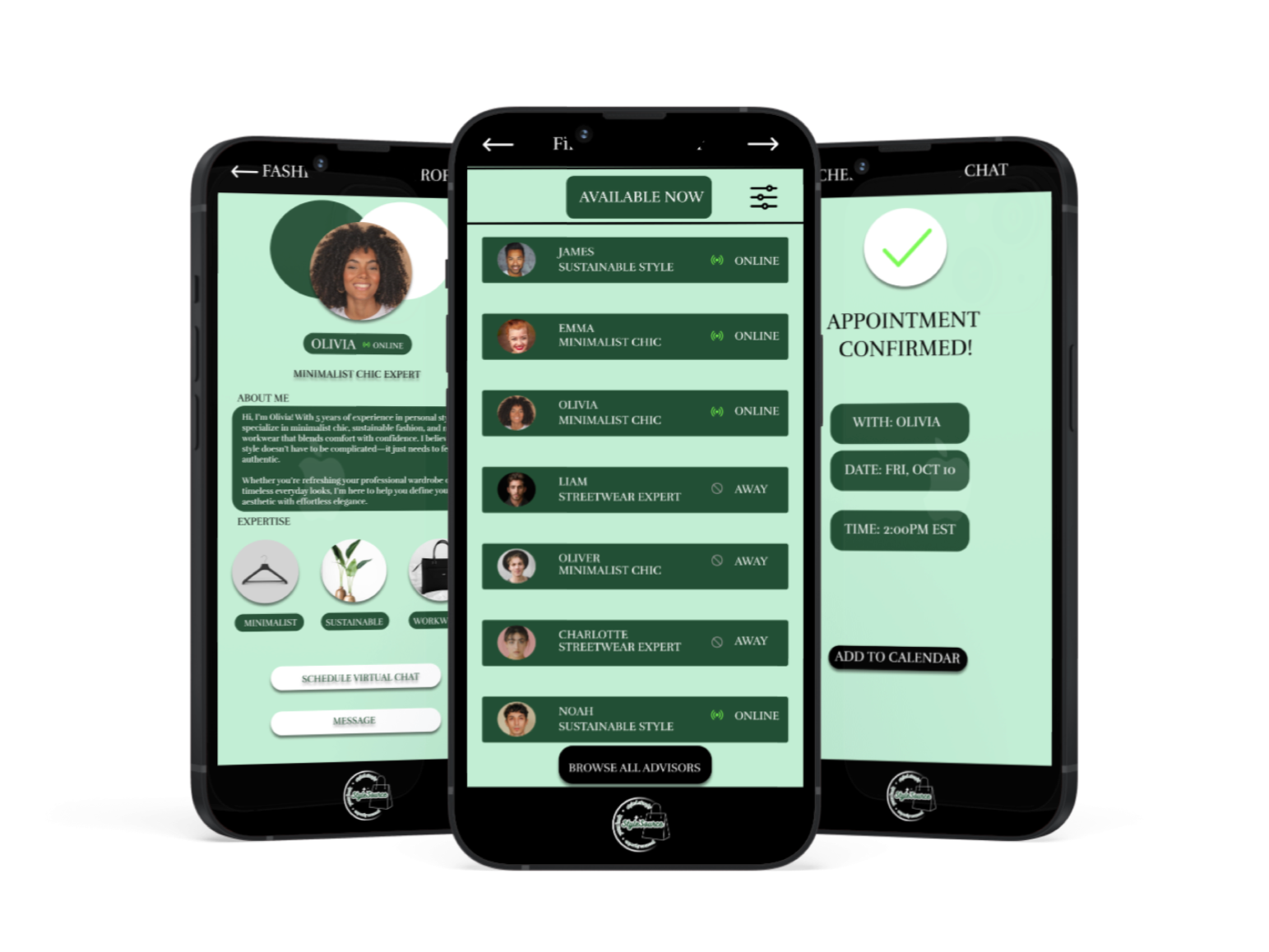
Designed to streamline communication between fashion advisors and shoppers through appointment scheduling, messaging, and curated recommendations.
Advisor Wireframe
These storyboards helped us align on user roles, identify potential friction points, and validate the overall workflow before investing time in detailed wireframes.
The following walkthrough demonstrates how users move through onboarding, define their style preferences, and receive personalized recommendations through the StyleSource experience.
Final Prototype Walkthrough
Results & Takeaways
The final StyleSource experience transformed fashion discovery from an overwhelming browsing process into a guided, personalized journey. Through structured onboarding, curated recommendations, and advisor-supported decision-making, the platform helped users discover products that aligned with their preferences while reducing cognitive load.
User walkthrough sessions showed that participants found the onboarding intuitive and engaging. Testing also informed several refinements, including clearer progress indicators, improved category labeling, and opportunities for future enhancements such as saving preferences and revisiting recommendations.
Results
One of the biggest lessons I took away from this project was that users don't always need more options, they need better guidance. While many e-commerce experiences prioritize larger product catalogs and increasingly complex filtering systems, our research showed that confidence comes from structure, clarity, and thoughtful recommendations.
This project strengthened my ability to translate research insights into practical design decisions. It reinforced the importance of balancing personalization, accessibility, and user autonomy while designing experiences that reduce cognitive overload without limiting user choice.
Reflection