
Playing to Collaborate: Cooperative Board Games as Tools for Workplace Team Training
A research paper exploring how cooperative board games can serve as low-cost training tools for workplace collaboration while informing the design of future collaborative technologies.
Project Type: Graduate Academic Individual Project
Timeframe: 10 Weeks | 2025
Role: UX Researcher • CSCW Researcher • Research Writer
Methods: Literature Review • Academic Research • CSCW Theory • Comparative Analysis • Research Synthesis • Critical Analysis
Challenge
How might cooperative board games improve workplace collaboration while informing the design of future collaborative technologies?
While workplace collaboration is often supported through digital tools such as Slack, Microsoft Teams, and Trello, many organizations overlook the value of low-tech, face-to-face collaborative experiences. This paper explores how cooperative board games, particularly Pandemic, can function as "analog groupware," providing teams with a safe environment to practice communication, coordination, role clarity, and shared decision-making. By connecting principles from Computer-Supported Cooperative Work (CSCW) with game-based learning, the research argues that cooperative games can strengthen teamwork while offering valuable insights for the design of future collaborative systems.
Before examining Pandemic as a case study, I explored foundational CSCW theories to understand how collaboration is created, maintained, and supported across teams. Rather than focusing solely on digital collaboration tools, this research investigated how established CSCW principles could be applied to analog, face-to-face environments.
Theoretical Foundations
Cost–Benefit Distribution: Explored how uneven distributions of effort and reward can negatively impact collaboration, emphasizing the importance of designing systems that encourage equitable participation.
Social Translucence: Examined how visibility, awareness, and accountability enable teams to coordinate effectively by making individual actions and shared information transparent.
Common Ground: Investigated how successful collaboration depends on developing shared understanding, clear communication, and coordinated decision-making among team members.
Analog Groupware: Introduced cooperative board games as physical collaboration systems that model many of the same teamwork dynamics found in digital collaborative technologies.
Case Study: Pandemic
To demonstrate how cooperative board games support collaboration, I used Pandemic as a case study. Unlike competitive games, Pandemic requires players to work toward a shared objective by coordinating roles, communicating under pressure, managing limited resources, and adapting to constantly changing conditions. These mechanics closely mirror the teamwork challenges organizations face in real-world workplace environments.
Role-Based Collaboration
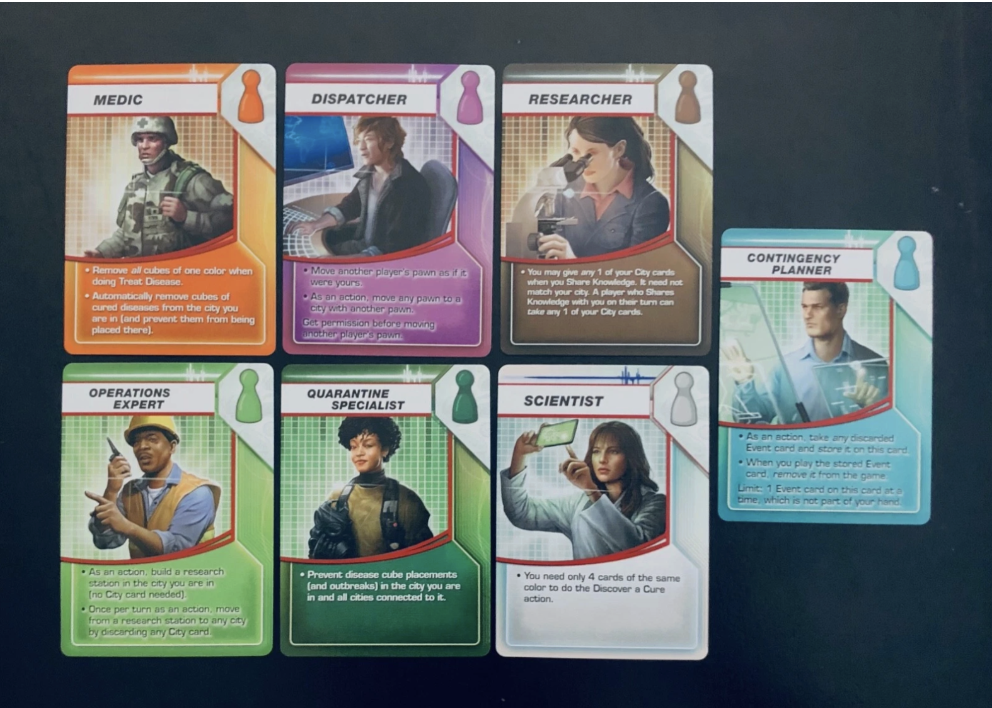
Each player assumes a unique role with specialized abilities, creating interdependence and encouraging teams to leverage individual strengths while working toward a common goal. This role differentiation reinforces communication, coordination, and shared responsibility.
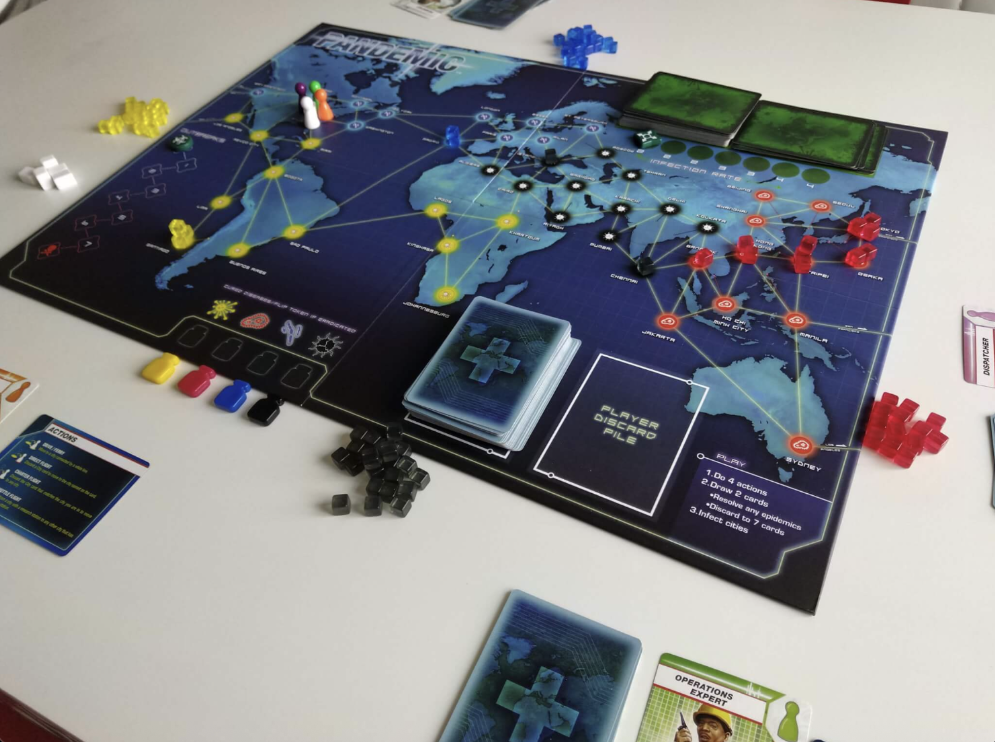
The game board acts as a shared representation of the team's progress, available resources, and emerging risks. By making information visible to everyone, players develop common ground, coordinate decisions, and adapt collectively as new challenges arise.
Shared Awareness & Decision-Making
Workplace Applications
The research suggests that cooperative board games have the potential to extend beyond entertainment and serve as practical tools for workplace training. By simulating real-world collaboration in a low-risk environment, games like Pandemic allow teams to practice communication, coordination, and collective decision-making before applying those skills in professional settings.
Team Communication: Players must continuously exchange information, discuss priorities, and adapt strategies together, reinforcing effective communication under pressure.
Role Clarity: Distinct player roles encourage individuals to understand their own responsibilities while recognizing how their contributions support the team's overall success.
Collaborative Decision-Making: Limited resources and evolving challenges require teams to negotiate priorities, solve problems collectively, and make decisions with incomplete information.
Inspiration for UX & CSCW: The collaboration patterns observed in cooperative board games offer valuable insights for designing future digital collaboration tools that better support awareness, coordination, and teamwork.
Results & Takeaways
This research demonstrates that cooperative board games can serve as effective, low-cost tools for developing workplace collaboration skills while offering valuable insights for the design of future collaborative technologies. By connecting CSCW theory with game-based learning, the paper reframes cooperative board games as more than recreational activities, they are structured environments for practicing communication, coordination, role clarity, and shared decision-making.
Results
This project challenged me to think beyond digital interfaces and recognize that meaningful collaboration is shaped by systems, behaviors, and human interaction, not just technology. It strengthened my ability to synthesize academic research, connect theory to real-world applications, and communicate complex concepts through a UX and CSCW lens. Most importantly, it reinforced that thoughtful design can draw inspiration from both digital and analog experiences to create stronger collaborative environments.
Reflection